2026 Best Open Frame Switching Power Supply for Buyers

Time:2026-11-09 Author:Charlotte
0%

Choosing the 2026 Best Open Frame Switching Power Supply means looking beyond the wattage printed on a label. Buyers must match input voltage, output voltage, current capacity, and regulation to the actual load. A compact supply may fit neatly beside a control board, yet still run too hot inside a crowded cabinet. Details matter.

Dr. Robert W. Erickson, a respected power-electronics educator and coauthor of Fundamentals of Power Electronics, offers a useful engineering perspective. A practical paraphrase of that perspective is: “Design around real operating conditions, not the headline rating.” This is a guide-authored summary, not a verified verbatim quotation. It reflects a simple buying principle: check the full datasheet, not just the product title.

This guide compares Open Frame Switching Power Supply options for common industrial, commercial, and embedded applications. It considers output stability, efficiency, thermal behavior, protection features, dimensions, and mounting needs. Look closely at derating curves, too. A supply rated for a certain output may deliver less when ambient temperatures rise or airflow is restricted. The right choice depends on the installation, not merely the catalog number.

Some specifications still leave room for judgment. Real cabinets vary, and a paper comparison cannot reproduce every operating condition. Use the shortlist to narrow candidates, then confirm the final selection against your load profile and installation environment. Small checks can prevent costly surprises.
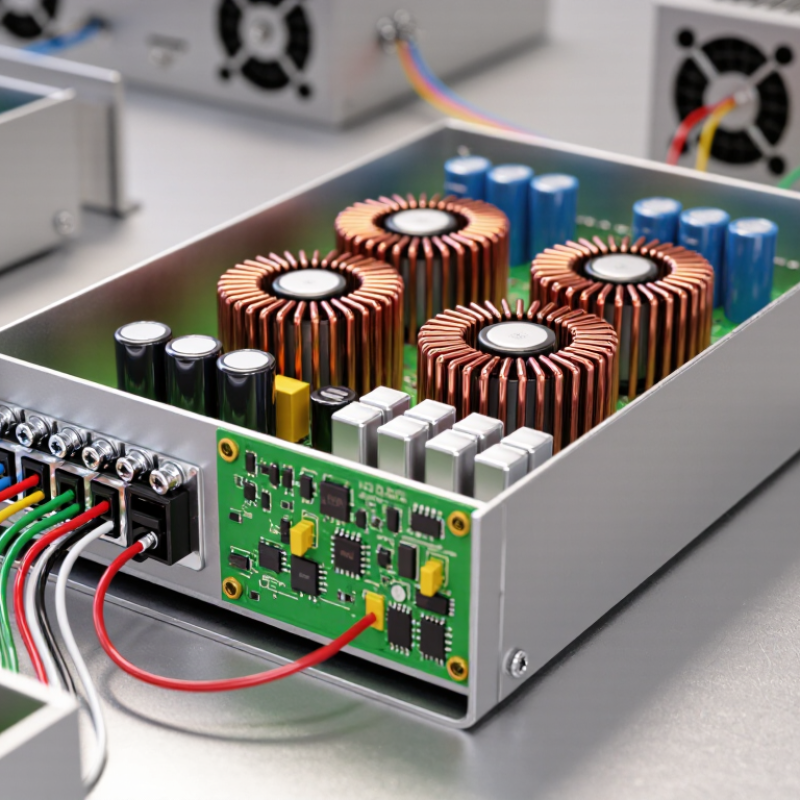
2026 Best Open Frame Switching Power Supply for Buyers

Open-Frame Switching Power Supplies: AC–DC Conversion and Typical 85–264 VAC Inputs

2026 Best Open Frame Switching Power Supply for Buyers

Open-frame switching supplies convert AC mains into regulated DC through rectification, switching, and filtering. A typical 85–264 VAC input range supports many mains conditions, but it is a design specification, not a guarantee of operation during every outage or surge. At 85 VAC, the rectified peak is about 120 V; at 264 VAC, it is about 373 V, before diode drops and load effects. That difference shapes capacitor stress, ripple, and component selection. Small details matter.

IEC 61000-3-2:2018 sets harmonic-current limits for many types of equipment drawing up to 16 A per phase; the applicable equipment class determines the limits. Buyers should check the supply’s input range, frequency rating, efficiency, and protection behavior against the actual load. A wide input range may still require adequate airflow and clearance. An open frame has no protective enclosure, so mounting and insulation details deserve careful review. One common oversight is assuming the label alone proves suitability.

Tips: Test at the lowest expected AC input while the full load is connected. Watch for excessive ripple, heat, or restart cycling. Check the datasheet’s derating curve; ambient temperature can reduce available output power. Verify that the system-level enclosure and wiring provide appropriate protection.

Match Output Rails and Continuous Wattage Using P = V × I

For a 2026 open-frame switching power supply, start with each output rail, not the headline wattage. Use P = V × I: a 12 V rail supplying 8 A delivers 96 W. Add the actual load on every rail, then check the datasheet’s combined-output limit. Individual rail ratings do not always add up to the advertised total. The arithmetic is simple. The load profile is less tidy.

Allow headroom for startup surges, changing loads, and higher ambient temperatures. Continuous wattage matters more than a brief peak rating; also check the manufacturer’s temperature derating curve. A 150 W unit may not provide 150 W continuously inside a warm, enclosed cabinet. Lawrence Berkeley National Laboratory’s 2024 United States Data Center Energy Usage Report estimates U.S. data centers used 176 TWh in 2023, about 4.4% of national electricity consumption. That figure is not a sizing rule, but it shows why wasted power and thermal conditions deserve attention. A common mistake is sizing from nominal current alone. Recheck the rail limits against real measurements, and leave a sensible margin. It is easy to overlook.

Compare Efficiency at 20%, 50%, and 100% Load with 80 PLUS Metrics

2026 Best Open Frame Switching Power Supply for Buyers

When comparing open-frame switching power supplies, check efficiency at 20%, 50%, and 100% load—not just the headline rating. The 80 PLUS program’s published 115 V criteria list Gold-level minimums of 87%, 90%, and 87% at those three points. These figures offer a useful reference, but 80 PLUS certification is designed for specific power-supply categories; it does not automatically certify every open-frame unit. Verify the product’s test conditions and datasheet.

Load matching matters. A 240 W supply running a 48 W device operates at 20% load, while the same device on a 480 W supply runs at 10%, outside the three-point comparison.

At 50% load, less input energy becomes heat than at lower-efficiency operating points, which can reduce cabinet warmth. Actual results still depend on input voltage, temperature, and measurement method. Compare manufacturer efficiency curves under matching conditions, and check whether figures are typical or guaranteed.

Numbers need context. I still treat a single efficiency figure as a screening tool, not a promise of field performance.

Check Product Safety Against IEC 62368-1 Requirements

When comparing an open frame switching power supply, check its safety evidence against IEC 62368-1, not just its output ratings. This standard uses a hazard-based approach for audio, video, and information technology equipment. It considers energy sources and the safeguards used to reduce risks such as electric shock, fire, and burns. Ask for documentation that identifies the exact model and applicable standard edition. A certificate for a similar unit may not cover the one you plan to buy. Small details matter.

Open frame units expose components, so installation affects safety. Check required clearances, insulation ratings, grounding instructions, and operating temperature limits. Then compare them with your enclosure, wiring, and expected load. A supply tested under specific conditions may need those conditions maintained in the finished equipment. Look closely at the safety report’s scope and any stated limitations; a datasheet alone is not enough. Not always. If the documentation is unclear, ask the supplier for clarification before approval. I have seen selection reviews focus heavily on efficiency and price, while overlooking mounting space or airflow. That is an easy mistake to make. Evaluate the power supply as part of the complete equipment, and have qualified personnel review the final installation.

2026 Best Open Frame Switching Power Supply for Buyers - Check Product Safety Against IEC 62368-1 Requirements

Buyer’s guide: The output combinations below are illustrative examples, not specifications for a particular product. Confirm ratings, approvals, operating conditions, and installation requirements in the selected power supply’s documentation.

Selection Profile Illustrative Output Example Suitable Application Considerations Key Datasheet Checks IEC 62368-1 Safety Checks
Compact, low-power supply 12 V DC at 5 A; 60 W calculated output Consider for lower-power control electronics, embedded equipment, or compact installations where the load’s voltage and current needs match. Output tolerance, ripple and noise, startup behavior, operating temperature, cooling method, and required input voltage range. Check the safety approval and edition applicable to the intended equipment and market. Review the manufacturer’s conditions of use and required protective measures.
General-purpose, medium-power supply 24 V DC at 5 A; 120 W calculated output Consider where a 24 V DC system bus is appropriate. Confirm that the supply can handle normal load, startup current, and any transient demand. Continuous output rating, derating curves, load regulation, overcurrent protection behavior, and permitted ambient temperature. Verify safeguards against electric shock and fire under the documented installation conditions, including enclosure, wiring, and cooling requirements.
Higher-current, low-voltage supply 12 V DC at 20 A; 240 W calculated output Consider for loads requiring substantial current at a lower DC voltage. Allow for wiring losses and ensure conductors and connectors are rated for the current. Terminal current limits, cable and connector requirements, output wiring length, overcurrent protection, and temperature rise at full load. Check whether the output and accessible circuits meet the required energy-source classification and safeguard conditions in the end equipment.
Higher-voltage DC bus supply 48 V DC at 5 A; 240 W calculated output Consider only when the equipment is designed for the selected DC bus voltage. Verify load compatibility and safe handling of the output circuit. Output voltage range, transient response, isolation details, grounding instructions, and applicable output protection limits. Assess shock hazards, insulation, and safeguards using the actual working voltage and equipment design; do not infer safety from nominal output voltage alone.
Multi-output supply Separate DC outputs as specified by the product datasheet Useful when equipment requires more than one rail. Confirm each rail’s rating and whether combined loading is restricted. Per-output and combined power limits, cross-regulation, sequencing, isolation between outputs, and behavior during overload. Review circuit relationships, accessible parts, insulation, and safeguards for each output and for the complete end-product assembly.
Fan-cooled or naturally cooled design Power rating depends on the specific model and cooling conditions Choose based on available airflow, installation orientation, dust exposure, acoustic needs, and the product’s stated derating conditions. Required airflow or clearance, fan reliability requirements if applicable, derating curves, and maximum component or ambient temperatures. Use only within the manufacturer’s documented thermal and installation limits. Evaluate fire and temperature hazards in the final enclosure.
IEC 62368-1 Verification Checklist
Review Item What Buyers Should Confirm Evidence to Request or Check
Applicable standard and certification Confirm the exact standard edition, product scope, certification status, and target-market requirements. A component approval does not automatically establish compliance of the finished equipment. Safety certificate or listing, test report details where available, model identification, and any stated conditions of acceptability.
Safeguards and electric-shock protection Check that the power supply’s insulation and protective measures are suitable for its intended installation and the end equipment’s accessible parts. Datasheet safety notes, installation instructions, insulation information, and required protective-earth or enclosure arrangements.
Clearance and creepage distances Verify spacing requirements for the actual working voltage and relevant design conditions. Required distances depend on factors such as insulation level, pollution degree, and material properties. Safety documentation or construction assessment for the specific model and intended use; do not apply one universal spacing value.
Energy-source classification Confirm the applicable electrical energy-source classification for the circuits and accessible parts in the completed equipment. Product safety documentation and an assessment of the end-product circuit under its intended operating and fault conditions.
Fire and abnormal-operation protection Review protection against fire and hazardous conditions during overload, short circuit, component failure, or other relevant abnormal operation. Overload and short-circuit protection specifications, safety test evidence, and integration requirements stated by the manufacturer.
Temperature and cooling Ensure the supply remains within its documented temperature and cooling limits when installed in the final enclosure and operated at the expected load. Derating curves, ambient-temperature range, airflow or clearance requirements, and installation orientation limits.
Final equipment assessment Assess the complete product, including wiring, protective devices, enclosure, grounding, and the power supply’s specified conditions of use. End-product safety evaluation against the applicable requirements; component-level documentation alone is not a substitute for this assessment.

Selection reminder: “Best” depends on the required output, load profile, cooling, installation, market, and end-product safety evaluation. IEC 62368-1 compliance should be confirmed from applicable certification and technical documentation rather than inferred from a generic specification.

Verify Harmonic-Current Compliance Under IEC 61000-3-2 for Loads ≤16 A per Phase

An open-frame switching power supply may look simple on a bench, but its input current can contain significant harmonic components. For equipment drawing no more than 16 A per phase, IEC 61000-3-2 may apply when it is connected to a public low-voltage system. Scope, equipment classification, and test conditions matter. Do not assume every supply follows the same limits.

Ask for a test report covering the exact model and input configuration. Check the standard edition, equipment class, supply voltage, frequency, and operating load. The report should show measured harmonic currents, not just a general compliance statement. If the supply supports several output levels, confirm which operating point was tested and whether the report reflects the intended end product. Small details matter.

A practical review includes the test setup and any external components used. Input filters or control circuitry can change the result. Compare the report with your real load, especially if it runs near full power for long periods. I would still question a report that lists no clear test conditions. That gap is easy to miss. A careful review now can prevent late redesigns, though testing the final assembly remains important.

2026 Best Open Frame Switching Power Supply for Buyers — Verify Harmonic-Current Compliance Under IEC 61000-3-2 for Loads ≤16 A per Phase

Selected odd-order harmonic currents compared with IEC 61000-3-2 Class A limits. Example readings are illustrative—not measured product data or evidence of compliance.

Lower readings are preferable. Confirm the applicable equipment class, standard edition, test conditions, and every required harmonic order; this chart alone cannot establish compliance.

FAQS

What does an open-frame switching power supply do?

It converts AC mains into regulated DC through rectification, switching, and filtering. Its exposed frame needs suitable mounting, insulation, and protection.

What does an 85–264 VAC input range mean?

It describes the AC voltage range the supply is designed to accept. It does not guarantee operation during every outage or surge.

Why test the supply at low input voltage?

At 85 VAC, the rectified peak is about 120 V before diode drops and load effects. Test at full load and watch for ripple, heat, or restart cycling.

How do I calculate the power needed for an output rail?

Multiply voltage by current: 12 V × 8 A equals 96 W. Add the loads on every rail, then check the combined-output limit. Simple math.

Is the advertised total wattage enough to confirm a supply will work?

No. Individual rail ratings may not add up to the advertised total. Check continuous output and the combined limit. A warm cabinet can reduce available power.

How much power headroom should I allow?

Allow room for startup surges, changing loads, and higher temperatures. Check the datasheet’s derating curve. I would still verify the load with real measurements.

Why do airflow and clearance matter for an open-frame supply?

Higher ambient temperatures can reduce output power. Provide adequate airflow and clearance, and ensure the surrounding enclosure and wiring offer appropriate protection. Easy to miss.

Does a wide input range prove the supply suits my equipment?

No. Check the frequency rating, efficiency, protection behavior, and actual load. The label alone does not settle it.

What should I check about harmonic current?

Some equipment drawing up to 16 A per phase has harmonic-current limits. The applicable equipment class affects those limits, so check the relevant specification.

Conclusion

Choosing an Open Frame Switching Power Supply in 2026 starts with confirming that its AC–DC input range suits the installation, with many models designed for 85–264 VAC. Next, match the required output rails and continuous wattage to the equipment. For each rail, estimate power with P = V × I, then allow suitable operating headroom rather than selecting a unit solely by its peak rating.

Compare efficiency at 20%, 50%, and 100% load, using 80 PLUS metrics where applicable and checking that the power supply performs well across its expected operating range. Also review safety documentation against IEC 62368-1 requirements and verify harmonic-current compliance with IEC 61000-3-2 for applicable equipment drawing no more than 16 A per phase. A careful comparison of electrical ratings, efficiency data, and compliance evidence helps buyers choose a supply suited to their system’s needs.


Charlotte

Charlotte

Charlotte is a seasoned marketing professional with a deep understanding of the company's portfolio and a passion for elevating its presence in the market. With a keen eye for detail and a commitment to excellence, she ensures that our professional blog is regularly updated with insightful articles......