How to Choose the Best Fast Mobile Charger?

Time:2026-11-16 Author:Ethan
0%

A phone can gain hours of useful battery life during a short break, but only when its charger, cable, and charging system work together. Choosing a Fast Mobile Charger is not just about picking the highest wattage on a product page. Your phone accepts power at a rate set by its own hardware and supported charging standards. A powerful adapter may therefore charge one model quickly and offer little extra benefit to another. Not wattage alone.

Check your phone maker’s specifications before comparing chargers. Look for supported charging protocols, maximum input power, and cable requirements. For example, a USB-C charger that supports USB Power Delivery may suit many devices, but compatibility still matters. A cable with the wrong rating can limit performance. Small details matter. Multiport chargers also divide their available power when several devices are connected, so read the output labels carefully.

Daily routines can help narrow the choice. A compact adapter may suit a commute, while a model with multiple ports can simplify charging at a desk. Heat is worth watching, too: warm charging can be normal, but excessive heat or repeated interruptions deserve attention. Choose a reputable brand, check clear safety and compatibility information, and avoid treating marketing claims as guarantees. Even careful comparisons have limits; phone settings, battery condition, and room temperature can change results. This guide explains which features deserve attention, so you can choose a charger that fits your device and habits—not just the biggest number.
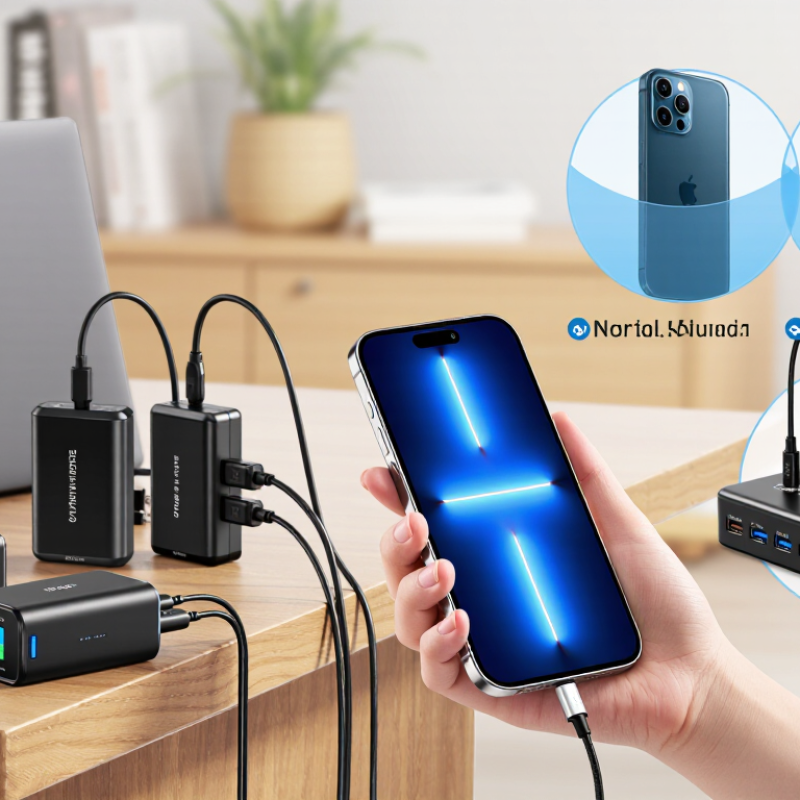
How to Choose the Best Fast Mobile Charger?

What Defines a Fast Mobile Charger?

A fast mobile charger delivers power that a phone can actually accept, not merely the highest number printed on its casing. Charging speed depends on negotiated wattage, supported charging protocols, cable capacity, and the phone’s temperature. USB-C is only a connector; it does not guarantee fast charging. Check the phone’s stated input limits and the charger’s output profiles. Small print matters.

USB-IF’s USB Power Delivery 3.1 technical specification allows compatible equipment to support up to 240 watts through Extended Power Range. That is a system ceiling, not a promise that a phone will charge at 240 watts. The device and charger must agree on a supported power level, and the cable must handle it. Heat also changes the experience: phones commonly reduce power as they warm up or approach a full battery. A charger may look powerful on paper, yet deliver less beside a sunny window or under a thick case. That number can mislead. For a practical comparison, look for clear output ratings, protocol compatibility, and credible safety certification. I would still question any claim that treats peak wattage as everyday speed.

How to Match a Charger to Your Device

To match a fast mobile charger to your device, check the charging specifications in its manual or on its original adapter. Note the connector type, supported charging standard, and maximum input power. A charger rated for more watts does not force those watts into your phone; the device generally draws only what it supports. Still, charging speed depends on protocol compatibility, not wattage alone. A USB-C plug may fit, yet a mismatched charging standard can leave your phone charging slowly.

Look at the cable, too. Some cables support less power than the charger, which can limit performance. If your phone becomes unusually hot, charging repeatedly disconnects, or the adapter makes a strange noise, stop using it and check the device maker’s guidance. Warmth can be normal during fast charging, but persistent heat deserves attention. It is easy to overlook the cable; I would not assume the adapter tells the whole story.

Tips: Compare the charger’s output profile with your device’s listed input requirements. Choose a reputable, safety-certified charger, and use a cable rated for the power you need. For travel, a compact charger with multiple ports can help, but sharing its output may slow charging. Check the fine print before buying.

How to Compare Charging Speed, Ports, and Power

A fast charger is only fast when its output matches your device’s charging protocol. Compare watts, not just labels: power equals volts multiplied by amps. The USB Implementers Forum’s USB Power Delivery Specification Revision 3.1 allows up to 240 watts in its Extended Power Range, while its Standard Power Range supports up to 100 watts. Those are maximums, not promises for every phone or cable. Your device sets the practical ceiling. Numbers can mislead.

Check each port’s rated output and the charger’s combined output. A three-port unit rated at 100 watts may not deliver 100 watts to every port at once. Look for a power-sharing table, especially if you charge a laptop and phone together. Then match the cable to the required wattage; an underspecified cable can limit charging speed. I still find shared-output charts easy to overlook. They matter. Also consider heat: charging speed may fall as a device warms, so a peak figure rarely tells the whole story. A small charger can suit a commute, but its port layout may frustrate a desk setup. Compare the figures with your actual devices, not an ideal scenario.

How to Choose the Best Fast Mobile Charger?

Compare charging power, port count, and how output is shared across connected devices.

USB Power Delivery Standard Power Range (SPR) supports up to 100 W, while Extended Power Range (EPR) supports up to 240 W. These are specification limits, not guaranteed phone charging speeds. Check that your device and cable support the charger’s output, and compare per-port power when multiple ports are in use because a charger may share its total output between them.

How to Check Safety Features and Build Quality

A fast charger should protect the phone as well as deliver power. Check the product label and manual for overcurrent, overvoltage, short-circuit, and temperature protection. Look for clear output ratings and a stated safety certification, then verify the certification details in the supplied documentation. A printed symbol alone is not proof. If the specifications are vague or inconsistent, choose another option.

Heat matters. During normal charging, the casing may feel slightly warm, but it should not become uncomfortably hot or smell unusual. Unplug it if you notice either. Inspect the plug, seams, and charging port for gaps, sharp edges, or loose parts. The shell should feel solid, not hollow or rattly. No wobble. Gently check that the cable connector fits securely without forcing it. A thick cable can look durable, but neat strain relief where the cable meets the plug is more useful evidence. I used to focus too much on charging speed; that number says little about how well a charger is assembled. Small details are easy to overlook, and a quick glance may miss a poor fit.

How to Balance Portability, Price, and Performance

A fast mobile charger is a three-way trade-off: pocket space, price, and useful speed. Start with your phone’s supported charging standard and maximum input; extra wattage may add bulk, not speed. Not just watts. USB-IF’s USB Power Delivery 3.1 specification supports up to 240 watts. That is a ceiling, not a phone recommendation. Check the charger’s output profiles, cable rating, and independent safety certification. A compact model can suit daily phone use, while a tablet may need more; check both device manuals.

Compare price per usable port, not just the sticker price. A second port helps at an airport, but shared output can slow both devices. Put the charger beside your keys and see whether it crowds your bag. Small details matter. UNITAR and ITU’s Global E-waste Monitor 2024 reports 62 million tonnes of e-waste worldwide in 2022; only 22.3% was formally collected and recycled. Those figures cover all e-waste, not chargers alone. They cannot prove that one durable adapter solves the problem. Still, checking warranty, build quality, and return terms may help avoid a premature replacement. Price comparisons are imperfect, too: charging speed changes with battery level and heat.

How to Choose the Best Fast Mobile Charger? — How to Balance Portability, Price, and Performance

Charger Type Typical Output Approximate Weight Typical U.S. Price Portability and Performance Best Suited For
Compact single-port USB-C 20–30 W About 35–75 g (1.2–2.6 oz) About $10–$25 Small and easy to carry. Often sufficient for fast-charging compatible phones and smaller tablets. One device can use the charger’s full output. Phone-first users who want a light, inexpensive everyday charger.
Compact USB-C with PPS 25–45 W About 45–100 g (1.6–3.5 oz) About $15–$35 Offers a useful balance of size and power. USB Power Delivery PPS can support compatible devices that require adjustable voltage; actual charging speed depends on the device and cable. Users who want a pocketable charger for a compatible phone or tablet.
Multi-port USB-C 45–65 W total About 80–160 g (2.8–5.6 oz) About $20–$50 Can charge a phone and another device at the same time. The available power is shared between ports, so each device may charge more slowly when multiple ports are in use. Travelers carrying a phone, earbuds, tablet, or other small USB-C devices.
Higher-power USB-C laptop charger 65–100 W About 120–300 g (4.2–10.6 oz) About $30–$90 Provides more headroom for compatible laptops and can also charge phones. Multi-port models may reduce the power available to a laptop when another device is connected. People who want one charger for a compatible laptop and mobile devices.
USB-A or mixed-port charger Typically 10–30 W per compatible port About 50–180 g (1.8–6.3 oz) About $8–$35 May work well with older USB-A cables and devices, but fast charging depends on the charger, cable, and device using compatible charging standards. Users who need to keep older USB-A accessories in service.

How to choose: Check your device’s supported charging standard and maximum input power before buying. Higher wattage does not force a device to draw more power than it supports. Prices and weights are approximate and vary by model and retailer; a suitable cable may be sold separately.

FAQS

How can I tell whether a charger matches my phone?

Check the phone manual or original adapter. Note its connector, supported charging standard, and maximum input power.

Will a higher-wattage charger make my phone charge faster?

Not necessarily. Your phone generally draws only the power it supports. Protocol compatibility matters too.

Can a USB-C plug still charge slowly?

Yes. The plug may fit, but an incompatible charging standard can limit speed.

Does the cable affect charging performance?

Yes. A cable rated for less power can slow charging, even with a capable adapter. I still overlook the cable sometimes.

What should I check on a multi-port charger?

Check each port’s output and the combined output. A 100-watt unit may share power between ports.

What do charging wattage figures really mean?

Wattage equals volts multiplied by amps. Some standards allow up to 100 watts in standard range and 240 watts in extended range. Those are limits, not promises.

Which safety details should I look for?

Check the label and manual for overcurrent, overvoltage, short-circuit, and temperature protection. Verify certification details in the documentation. A printed symbol alone proves little.

What signs mean I should stop using a charger?

Stop if it becomes uncomfortably hot, smells unusual, makes strange noises, or repeatedly disconnects. Warmth can be normal. Persistent heat deserves attention.

How can I judge a charger’s build quality?

Look for solid seams, a secure plug, and cable strain relief. No wobble. A quick glance can still miss a poor fit.

Conclusion

Choosing the best Fast Mobile Charger starts with understanding what makes a charger fast: its power output and supported charging standards must work with your device. Check your phone or tablet’s specifications before buying, since a high-wattage charger cannot exceed the device’s own charging limits. Matching the charger and cable to your device helps you get reliable performance.

Compare charging speed, the number and type of ports, and how power is shared when charging multiple devices. Look for safety protections such as safeguards against overheating, overcurrent, and overvoltage, along with a sturdy design and dependable materials. Finally, consider how often you travel, how much portability matters, and whether the price reflects the performance you need. The right choice balances compatibility, speed, safety, and convenience without paying for features you will not use.


Ethan

Ethan

Ethan is a seasoned marketing professional with a deep expertise in our company's innovative product line. With a passion for sharing knowledge and insights, he takes the lead in regularly updating our corporate blog, where he explores industry trends, product features, and effective marketing......