Top Desktop Power Adapter Suppliers Worldwide?

Time:2026-10-26 Author:Aria
0%

Choosing the right Desktop Power Adapter supplier requires more than comparing prices or browsing polished catalogs. Global buyers must examine electrical performance, thermal behavior, production consistency, and after-sales support. A reliable adapter should deliver stable voltage beside a warm monitor, crowded workstation, or continuously operating point-of-sale terminal. Small details matter. Cable strain relief matters.

Dr. Christophe Basso, a respected power-supply design authority, states, “A power supply must be designed as a complete system, not as an isolated circuit.” This principle helps explain why leading suppliers invest in transformer design, protection circuits, electromagnetic compatibility testing, and repeatable factory inspection. Their capabilities may include international safety certifications, custom housings, multiple DC outputs, and long-term component availability. However, certification alone does not prove dependable field performance. Buyers should request test reports, failure-rate data, sample units, and clear warranty terms.

This guide examines top Desktop Power Adapter suppliers worldwide through practical and technical criteria. It considers engineering experience, manufacturing scale, quality systems, customization, delivery reliability, and regional service. Supplier rankings are never permanent. Markets change. Product pages can also exaggerate. That deserves attention.

A sensible evaluation compares documented evidence with hands-on testing. Check the adapter under load, not only at idle. Measure temperature after several hours. Listen for coil noise. Review the plug design carefully. These observations often reveal weaknesses that brochures omit. The strongest suppliers combine dependable hardware with transparent communication, responsive engineers, and realistic performance claims. Some may not be the cheapest. They may be safer investments.
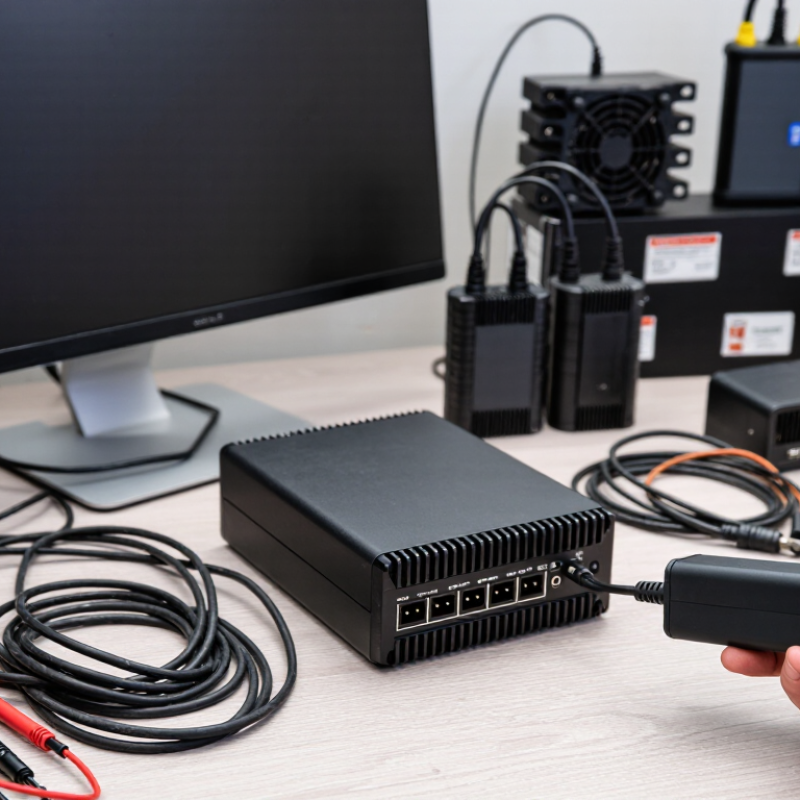
Top Desktop Power Adapter Suppliers Worldwide?

What Are Desktop Power Adapters and Why Do Supplier Choices Matter?

Desktop power adapters are external units that convert wall electricity into the stable DC power used by monitors, mini PCs, routers, and office equipment. A typical adapter includes a power cord, conversion circuit, cooling design, and protective housing. Its small size can be misleading. Heat, voltage fluctuation, and daily cable movement can expose weak engineering.

Supplier choice matters because adapter quality affects safety, uptime, and product reputation. Experienced suppliers should provide accurate output ratings, efficiency data, insulation details, and documented safety testing. They should also explain how each batch is inspected. Ask about overload, short-circuit, and temperature testing. Clear traceability is essential when a field failure appears months later.

Practical sourcing involves more than comparing unit prices. Check sample performance under continuous load, not only during a quick demonstration. Review lead times, minimum order quantities, packaging, replacement support, and warranty procedures. A reliable supplier communicates delays early and keeps specifications consistent. That sounds basic. It is often missed.

I have learned that a polished specification sheet cannot reveal every weakness. A sample may pass while production quality drifts. Independent inspections and periodic retesting reduce that risk. Buyers should also confirm connector fit, regional plug requirements, and energy-efficiency rules before ordering. The cheapest option may become expensive after returns, downtime, and customer complaints.

Which Regions Lead the Global Desktop Power Adapter Market?

Asia-Pacific leads the global desktop power adapter market through strong electronics manufacturing networks. China, Taiwan, South Korea, and Vietnam support large-scale production, component access, and fast export routes. Shenzhen and Ho Chi Minh City, for example, connect factories with nearby testing, molding, and cable suppliers. This regional concentration often lowers production costs. It can also shorten development cycles.

North America remains a major demand center, especially for office equipment, monitors, networking devices, and replacement adapters. The United States and Canada value electrical safety, energy efficiency, warranty support, and stable distribution. Europe follows closely, with strong demand from Germany, France, Italy, and the Netherlands. European buyers often examine efficiency data, documentation, recycling obligations, and plug compatibility before approving a supplier. Requirements can vary. That detail is easy to underestimate.

Tips: Compare suppliers by region, not only by price. Check factory audits, output capacity, safety reports, connector samples, and delivery records. Ask how they manage voltage differences and seasonal capacity changes. A low quotation may hide slower testing or higher freight costs. Forecasts are not always neat. Keep a qualified backup supplier when schedules matter.

How to Evaluate Desktop Power Adapter Suppliers Worldwide

Evaluating desktop power adapter suppliers requires more than comparing unit prices. Mordor Intelligence’s 2024 AC-DC power supply report projects nearly 6% annual market growth through 2029. This expansion attracts inexperienced suppliers. Check factory audit records, production capacity, and traceability before approving samples. Ask for IEC 62368-1 test evidence, efficiency results, no-load consumption, and thermal data. Confirm whether reports cover the exact model, not a similar prototype.

Reliability should be measured under real desktop conditions. Request output ripple tests, surge protection results, insulation checks, and aging records. A supplier should explain component sourcing and corrective-action procedures clearly. The U.S. Department of Energy’s external power supply requirements emphasize active-mode efficiency and no-load performance. These figures matter during long office hours. However, laboratory results can miss poor cable strain relief or overheating inside crowded workspaces. That is where evaluation becomes less tidy.

Tips: Compare three suppliers using the same checklist. Inspect samples after extended loading. Review failure rates, warranty returns, and delivery history. Ask for production photos and calibration records. Do not trust polished certificates alone. A useful scorecard may still overlook communication delays or rushed substitutions. Leave room for independent testing, especially when adapters serve multiple computer configurations.

Top Desktop Power Adapter Suppliers Worldwide? - How to Evaluate Desktop Power Adapter Suppliers Worldwide

Evaluation Dimension Recommended Evaluation Benchmark Documents or Data to Request Suggested Weight Scoring Method
Electrical Safety Compliance The adapter should be tested against the safety requirements applicable to its target market, such as IEC 62368-1 for information and communication technology equipment. Current test report, certificate, model number, rated input and output specifications, and certification scope. 20% 5 = independently verified; 3 = documents supplied but incomplete; 1 = no verifiable evidence.
Energy Efficiency Compare average active efficiency and no-load power consumption with the energy requirements of the destination market, including applicable U.S. Department of Energy Level VI or European Code of Conduct requirements. Efficiency test data at 25%, 50%, 75% and 100% load, no-load consumption data, and test conditions. 15% 5 = exceeds target-market requirement; 3 = meets requirement; 1 = does not meet requirement.
Output Configuration Verify that output voltage, current, wattage, polarity, connector dimensions and regulation are compatible with the end product. Electrical specification sheet, connector drawing, polarity diagram, tolerance limits and sample test results. 15% 5 = fully matched and validated; 3 = minor adjustments required; 1 = compatibility risk.
Protection Functions The design should include protection against over-voltage, over-current, short circuit, over-temperature and abnormal operating conditions where applicable. Protection-circuit description, abnormal-condition test results, thermal test data and failure-mode analysis. 10% 5 = all key protections verified; 3 = partial evidence; 1 = protection data unavailable.
Material and Environmental Compliance Materials should comply with applicable restrictions, including RoHS and REACH requirements for the intended market. Material declarations, supplier declarations, restricted-substance test reports and product composition records. 10% 5 = complete and current evidence; 3 = declaration only; 1 = no compliance information.
Manufacturing Quality System A documented quality-management system, preferably certified to ISO 9001, should cover incoming inspection, production controls, final testing and corrective actions. Quality certificate, production process flow, inspection plan, calibration records and sample corrective-action report. 10% 5 = certified and auditable; 3 = documented but uncertified; 1 = weak or undocumented controls.
Production Capacity and Lead Time Assess whether the supplier can support forecast volume, seasonal demand, engineering changes and agreed delivery windows without compromising quality. Monthly capacity statement, production schedule, standard lead-time range, capacity-allocation policy and on-time delivery records. 10% 5 = capacity and delivery history verified; 3 = capacity stated but not verified; 1 = unclear capacity.
Product Customization Evaluate the ability to customize output ratings, plugs, cable length, enclosure design, labels, packaging and firmware or control functions when required. Engineering capability profile, customization examples, tooling requirements, sample-development process and change-control procedure. 5% 5 = proven customization process; 3 = limited customization; 1 = standard products only.
Warranty and Technical Support Review warranty coverage, failure analysis, replacement procedures, response times and long-term availability of the selected model. Written warranty terms, technical-support contacts, RMA procedure, failure-analysis format and product-life-cycle policy. 5% 5 = clear and responsive support; 3 = basic support; 1 = undefined responsibility.
Total Cost of Ownership Compare unit price together with tooling, testing, shipping, duties, warranty exposure, energy consumption and expected failure-related costs. Itemized quotation, payment terms, tooling charges, packaging details, shipping assumptions and cost-of-quality data. 5% 5 = transparent and competitive total cost; 3 = partial cost visibility; 1 = hidden or uncertain costs.
Weighted Evaluation Result Score each dimension from 1 to 5, multiply by the suggested weight, and compare suppliers using the same evidence standard.
Recommended selection rule: Shortlist suppliers that meet the mandatory safety, energy-efficiency and environmental requirements for the destination market before comparing price, capacity and customization.

What Products, Standards, and Services Do Top Suppliers Offer?

Top Desktop Power Adapter Suppliers Worldwide?

Leading desktop power adapter suppliers offer more than wattage and attractive casing. Their portfolios often include 30W to 240W adapters, USB-C Power Delivery models, multi-port units, regional plug options, and customized cable lengths. GaN designs can reduce size, but thermal testing remains essential. A smaller enclosure is not automatically safer. Reliable suppliers validate products against IEC 62368-1, applicable EMC requirements, DOE Level VI, and European ecodesign rules. USB-C products should also follow current Power Delivery specifications, with clear output profiles printed on the label.

Professional service separates capable suppliers from simple trading companies. Strong suppliers provide schematic reviews, sample testing, aging tests, factory audits, serial-number traceability, and change-control records. They can support compliance files for different markets and provide replacement planning after production. Some offer firmware support for intelligent adapters, although this adds another failure point. Buyers should request test reports, not only certificates. A certificate without traceable laboratory evidence deserves careful review.

Sustainability now affects supplier evaluation. The Global E-waste Monitor 2024, published by UNITAR and the ITU, reported 62 million tonnes of electronic waste in 2022. It projects 82 million tonnes by 2030. Suppliers therefore need recyclable packaging, repair guidance, spare-cable programs, and responsible end-of-life channels. Warranty length matters, but return-rate data matters more. No supplier gets every detail right. Procurement teams should compare heat performance, standby power, safety margins, and field failures before choosing the lowest quotation.

How Can Buyers Select the Right Desktop Power Adapter Supplier?

How Can Buyers Select the Right Desktop Power Adapter Supplier?

Choosing a desktop power adapter supplier requires more than comparing unit prices. Buyers should match output voltage, current, connector size, polarity, and plug type with the target device. A small mismatch can cause overheating or unstable performance. Ask for evidence. Request datasheets, sample units, inspection records, and relevant safety test reports. Reliable suppliers explain their testing process clearly.

Experience also matters during supplier evaluation. An established engineering team should understand heat management, insulation, cable strain, and enclosure design. Ask how the supplier handles design changes and production defects. Their answers often reveal more than a polished presentation. Visit the factory when possible, or arrange a live video inspection of assembly and testing areas. Look for organized workstations, traceable materials, and calibrated measuring equipment.

Supply continuity deserves careful attention. Confirm minimum order quantities, lead times, warranty terms, replacement procedures, and communication channels. A low quotation may hide expensive delays. I have seen buyers overlook connector tolerances, then repeat testing after delivery. That mistake is avoidable, although specifications can still change unexpectedly. Request pilot samples before approving large production. Check several units under normal load, higher room temperatures, and repeated plug-in cycles. Not just promises. A dependable supplier provides consistent documentation and responds precisely when problems appear.

Top Desktop Power Adapter Suppliers Worldwide? How Can Buyers Select the Right Desktop Power Adapter Supplier?

Representative Nominal AC Supply Voltage by Major Destination Market

Desktop power adapter buyers should prioritize suppliers that support a wide input range, commonly 100–240 V AC, while also verifying output stability, applicable safety approvals, efficiency performance, connector compatibility, minimum order quantity, lead time, and traceable quality-control procedures.

Data reference: representative nominal supply voltages based on IEC 60038 and published national electrical-grid specifications. Local variations and special installations may apply.

FAQS

What is a desktop power adapter?

It converts wall electricity into stable DC power for monitors, routers, mini PCs, and office equipment. It usually includes a cord, circuit, cooling system, and protective housing.

Why does supplier selection matter?

Supplier quality affects safety, uptime, and product reputation. Weak designs may overheat, fluctuate, or fail after daily cable movement. Small size can hide problems.

What technical information should buyers request?

Request output ratings, efficiency data, insulation details, and documented safety tests. Ask for overload, short-circuit, and temperature test results. Certificates alone are not enough.

How should an adapter sample be tested?

Test the sample under continuous load, not only during a quick demonstration. Measure heat, voltage stability, standby power, and connector fit. Short tests can mislead.

What product options can capable suppliers provide?

Product ranges may include 30W to 240W models, multi-port units, regional plugs, and customized cable lengths. Smaller high-efficiency designs need careful thermal testing.

Which compliance details should buyers review?

Review electrical safety, electromagnetic compatibility, energy-efficiency rules, and applicable regional requirements. Power-delivery models should show clear output profiles on their labels.

What services distinguish a capable supplier?

Useful services include schematic reviews, sample testing, aging tests, factory audits, serial traceability, and change-control records. Ask for laboratory evidence. Paperwork can look polished.

How can buyers reduce long-term costs?

Compare return rates, warranty procedures, replacement support, lead times, and minimum order quantities. A low quotation may create expensive returns and downtime later. I might still underestimate field failures.

Conclusion

Desktop Power Adapters are essential power-conversion devices used to provide stable, safe, and efficient electricity for computers, monitors, networking equipment, medical devices, and other electronic products. Supplier selection matters because quality, reliability, certification, production capacity, and technical support directly affect product performance and long-term operating costs. The global market is supported by manufacturing and technology regions across Asia, Europe, and North America, each offering different advantages in engineering expertise, supply-chain efficiency, customization, and service coverage.

When evaluating Desktop Power Adapter suppliers worldwide, buyers should review output specifications, connector options, energy-efficiency levels, safety standards, electromagnetic compatibility, quality-control procedures, and delivery capabilities. Leading suppliers typically provide standard and customized models, testing documentation, packaging support, sample services, and dependable after-sales communication. The right supplier should match the buyer’s voltage requirements, application environment, order volume, compliance needs, budget, and expected delivery schedule while demonstrating consistent quality and transparent business practices.


Aria

Aria

Aria is a dedicated marketing professional with a deep passion for innovative strategies and a keen understanding of our company's product offerings. With a wealth of experience in the industry, Aria excels at crafting engaging content that highlights the unique features and benefits of our......