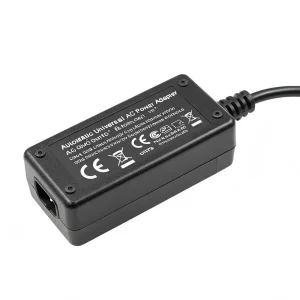
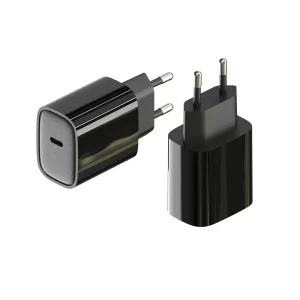
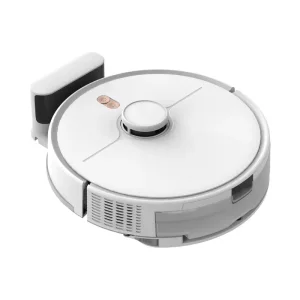
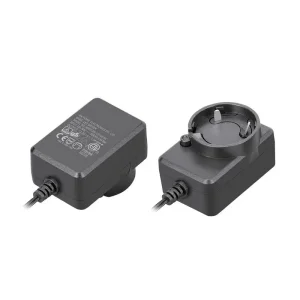
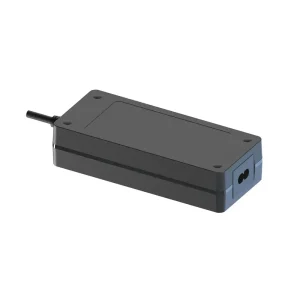
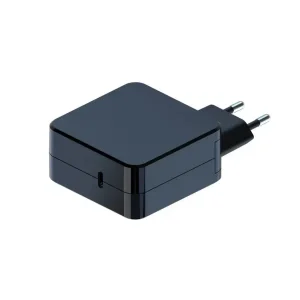
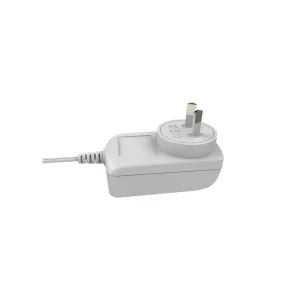
Explore our foundational power engineering systems designed for consumer electronics, smart home appliances, and specialized medical environments.
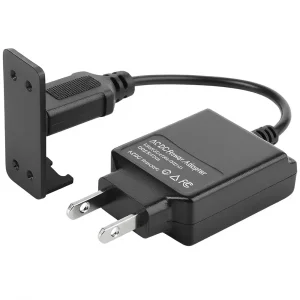
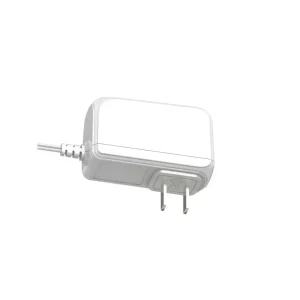
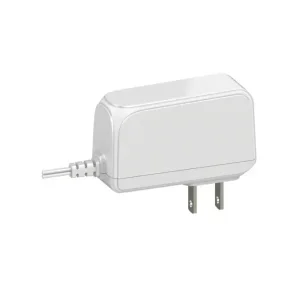
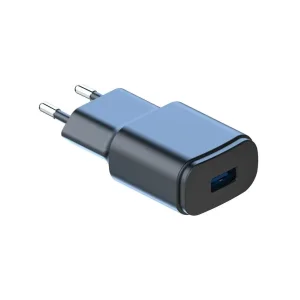
Established in August 2010, Shenzhen FuYun (RUIYU) Technology Co., Ltd. has developed into a premier global enterprise specializing in the R&D, design, manufacturing, and distribution of high-efficiency power adapters, smart chargers, wireless charging pad architectures, and specialized high-pressure core parts for hair-dressing systems.
Based in the technology manufacturing hub of Shenzhen, China, our company boasts over 800 employees, a highly specialized management and engineering cadre of over 30 experts, and an state-of-the-art facility featuring automated production lines, precise SMT machinery, and dedicated reliability testing labs. By committing to rigorous engineering standards, we successfully export 60% of our production volume to the demanding USA and EU markets, with rapid growth across domestic Chinese, Japanese, and South Korean industrial sectors.
We standardize our Standard Operating Procedures (SOP) across all assembly phases. Every single power transmission system is tested against strict international safety rules, ensuring a 100% pass rate before packaging.

Facility location: No.129 of the First Industrial Zone, Lisonglang Community, Gongming Town, Guangming New District, Shenzhen, Guangdong, China.
Analyzing market drivers, supply chain demands, and procurement strategies for high-frequency inductive energy systems.
The global market for wireless charging pads has transitioned from a niche premium feature to a universal technology standard across consumer, automotive, and industrial domains. Driven by the expansion of the Internet of Things (IoT), smart wearables, and electric vehicles (EVs), the demand for high-efficiency electromagnetic induction systems is expanding rapidly. Global industrial buyers face the critical task of sourcing wireless charging equipment that delivers high efficiency, meets international electromagnetic compatibility (EMC) regulations, and supports robust thermal management.
As an established OEM/ODM leader, Shenzhen FuYun Technology addresses these market needs. By implementing advanced resonant induction topologies and integrating high-quality magnetic separation materials, we provide charging solutions that minimize power loss and limit electromagnetic interference. Modern commercial operations demand wireless charging hardware that is compatible with multiple protocols (such as WPC Qi standards, including the latest Qi2 specifications), operates safely in variable environments, and maintains high power delivery rates.
We source raw components and high-grade copper windings directly from reliable partners, protecting our production lines against global supply chain fluctuations.
Our ongoing development focus supports Qi2 and Magnetic Power Profile (MPP) integration, providing precise coil alignment and faster charging times.
By using custom thermal management materials and heat-dissipating substrates, we prevent device overheating during extended charging cycles.
Deep dive into current and future power transmission technologies, circuit architectures, and efficiency engineering.
At the core of modern wireless charging pads is the principle of electromagnetic induction, governed by Faraday’s Law. High-frequency alternating current is driven through a transmitter coil (Tx), creating a localized oscillating magnetic field. When a receiver coil (Rx) is placed in close proximity, the magnetic flux induces an alternating voltage. This AC signal is rectified, filtered, and regulated by high-performance IC chips to deliver clean DC power to the battery.
Traditional inductive charging requires precise physical alignment to maintain high coupling coefficients (k). With the release of Qi2, the introduction of the Magnetic Power Profile (MPP) ensures consistent alignment using integrated magnets, improving energy efficiency and reducing thermal waste. Concurrently, the integration of Gallium Nitride (GaN) power transistors into the switching stages allows transmitters to operate at higher frequencies with lower switching losses, paving the way for compact, high-power designs.
A key challenge in wireless power transmission is the presence of stray metallic objects (such as keys or coins) within the alternating magnetic field. If undetected, Eddy currents will heat these objects, creating a fire hazard. Shenzhen FuYun's engineers integrate dual-method FOD systems based on Quality Factor (Q-factor) change monitoring and real-time power loss calculation (comparing Tx output power with Rx received power telemetry) to ensure safe operation.
Our engineering team focuses on three key technological areas to optimize energy transfer efficiency:
Delivering adaptable charging infrastructures for diverse industrial, commercial, and residential use cases.
Custom-fit charging modules integrated into vehicle consoles. Features wide-temperature tolerance, vibration resilience, and intelligent keyless entry shield logic to prevent signal interference.
Seamlessly embedded charging zones for office desks, conference tables, and hotel guestroom nightstands. Features sub-surface mounting capabilities with waterproof, IP67-rated enclosures.
Hermetically sealed, easy-to-sanitize wireless charging bays for medical tablets, diagnostic handhelds, and patient-monitoring devices, preventing dirt and pathogen buildup in physical ports.
High-power, wear-free wireless docking bays designed for Automated Guided Vehicles (AGVs) and autonomous robots operating in dusty or explosive atmospheres where physical spark risks must be eliminated.
Over a decade of commitment to safety, technological advancement, and global supply chain expansion.
RUIYU Technology was officially established, focusing on AC/DC adapters, switching power supplies, and early-stage wireless inductive charging research.
Obtained universal certifications including TUV, GS, BS, CE, UL, FCC, C-UL, PSE, SAA, and CCC, demonstrating compliance for international market distribution.
Products verified as compliant with European environmental guidelines through formal RoHS testing executed by SGS Group.
Standardized our internal manufacturing procedures, obtaining the ISO9001:2000 quality management system certification.
Monthly order volume scaled to 800,000 units, securing anchor clients in the US, EU, UK, Japan, China, and customized ODM partnerships in South Korea.
How our integrated departments collaborate to design, verify, and manufacture reliable power systems.
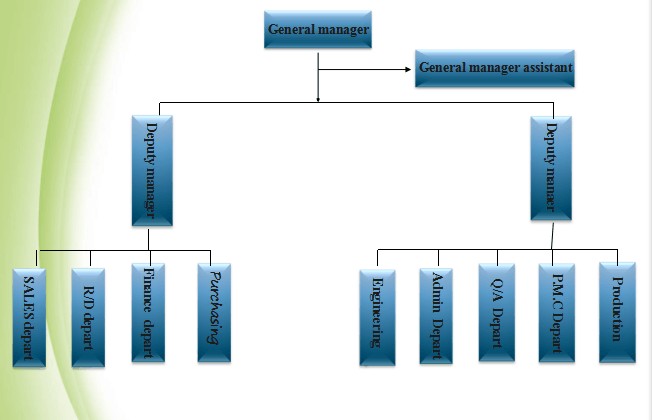
At Shenzhen FuYun Technology, we operate as a unified family. Success in high-efficiency manufacturing relies on close collaboration between departments, from raw material inspection to final product verification.
Our R&D department tracks global technology trends to ensure compatibility with modern charging standards. Simultaneously, our QA and QC departments verify that each component meets strict performance thresholds.
Designs custom adapter layouts and wireless charging circuits to match market demands and secure international safety certifications.
Sourcing of raw components based on production schedules, minimizing material delivery delays.
Performs automated testing on incoming raw components and conducts burn-in tests on finished goods.
Executes SMT placement, winding assembly, housing sealing, and functional testing in accordance with ISO9001 processes.
Provides support for global clients, managing inquiries, custom tooling specifications, logistics coordination, and after-sales service.
Answers to common industry questions regarding safety standards, efficiency levels, and custom manufacturing processes.
Typically, electromagnetic wireless systems operate with an efficiency of 72% to 80% under optimal coil alignment. Loss of efficiency is caused by flux leakage, coil DC resistance (which produces heat), and switching losses in the drive circuit.
We address this by using high-grade Litz wires for the coils, high-permeability ferrite sheets, and modern control chips. These components maintain optimal switching frequencies, minimizing loss even during slight misalignment.
Our safety architecture uses multi-tier protection logic. The hardware includes internal Negative Temperature Coefficient (NTC) thermistors to monitor surface temperatures in real time. If the temperature exceeds 60°C, the transmitter reduces power delivery or suspends the charging cycle.
This is backed by over-current protection (OCP), over-voltage protection (OVP), and foreign object detection (FOD) algorithms, ensuring safety for both the charger and the connected device.
Yes, our systems are designed to transfer power across physical distances (Z-gap) of 3mm to 8mm. This allows charging through plastic, leather, or wooden cases.
However, the presence of metal plates, magnetic strips, or carbon fiber in the case will trigger our Foreign Object Detection (FOD) sensors, suspending power transmission to prevent eddy current heating.
Imports into the US require FCC Part 15 and FCC Part 18 certifications to regulate electromagnetic interference. For the EU market, CE marking is required, confirming compliance with the Radio Equipment Directive (RED) 2014/53/EU and RoHS regulations.
Shenzhen FuYun maintains compliance certifications including TUV, GS, CE, UL, FCC, and PSE, simplifying customs clearance and local market entry.
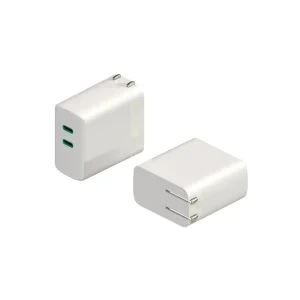
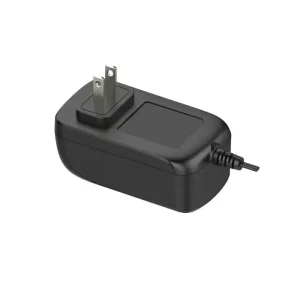
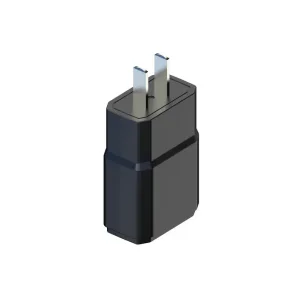
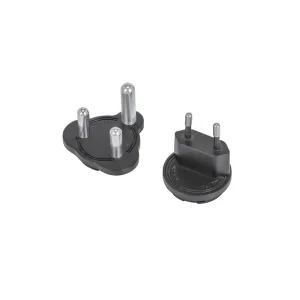
Highly certified wall mount adapters, desktop power units, and travel adapters supporting heavy industrial operations.
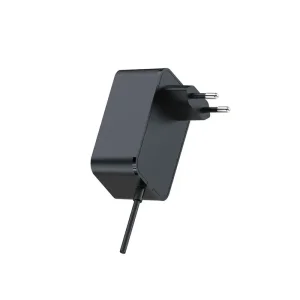
 Tech Adapter